
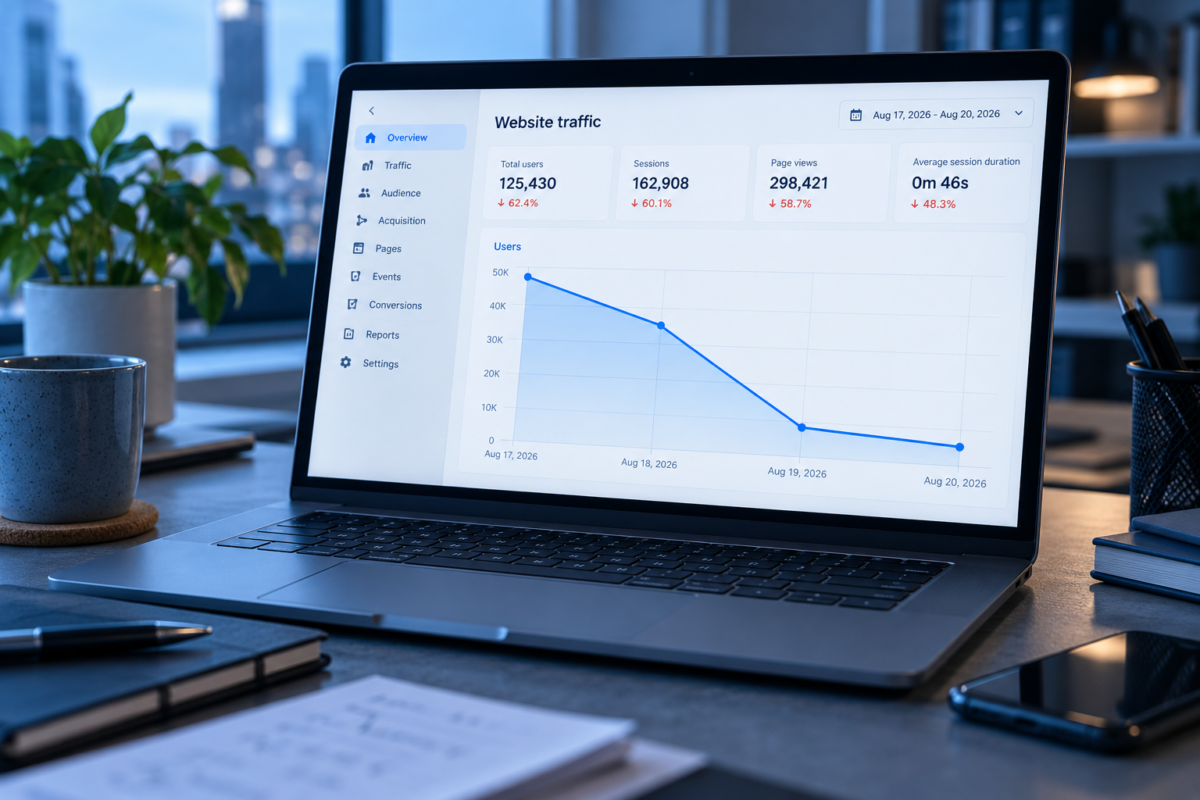
A Google spam update is a change to Google's automated spam detection, mainly its AI-based system called SpamBrain, that lowers or removes pages breaking Google's spam policies. A core update reassesses quality broadly. A spam update looks for specific manipulative practices. If your traffic dropped sharply during one of this year's rollouts, the useful question is which practices were in scope and whether any of them apply to your site.
The Three Spam Updates of 2026
| Update | Dates | What Google said |
|---|---|---|
| March 2026 | Started March 24, finished within about a day | No specific focus named |
| June 2026 | Started June 24, took about two days | Not aimed at link spam or site reputation abuse |
| August 2026 | August 18 to 21 | Global, all languages; again not aimed at link spam or site reputation abuse |
The most useful detail is what Google ruled out. By saying the June and August updates were not about link spam or site reputation abuse, Google pointed attention toward problems with the content itself.
The Policies Most Likely Involved
With links and site reputation abuse set aside, these are the Google spam policies worth checking your site against. Google describes all of them in its spam policies documentation.
- Scaled content abuse: many pages made mainly to rank, with little value to readers, whether written by people, AI, or both
- Doorway abuse: near-identical pages for different cities or keywords that all lead to the same place
- Scraped content: copying content from other sites and republishing it with little added
- Keyword stuffing: unnatural repetition of search terms, often in templates or footers
- Thin affiliate pages: product pages that add nothing beyond the seller's own description
- Expired domain abuse: buying an old domain for its reputation and filling it with unrelated content
A Newer Rule: Manipulating AI Answers
On May 15, 2026, Google updated the opening of its spam policies to say that trying to manipulate generative AI responses in Google Search also counts as spam. That covers AI Overviews and AI Mode. In practice, tactics such as publishing "best of" lists that always put your own business first, or planting repeated brand mentions just to be picked up by AI answers, now clearly carry risk. Writing clear, accurate information that AI tools can use is not spam.
How to Tell if Your Site Was Hit
- Check whether your drop lines up with August 18 to 21, or with the June or March dates.
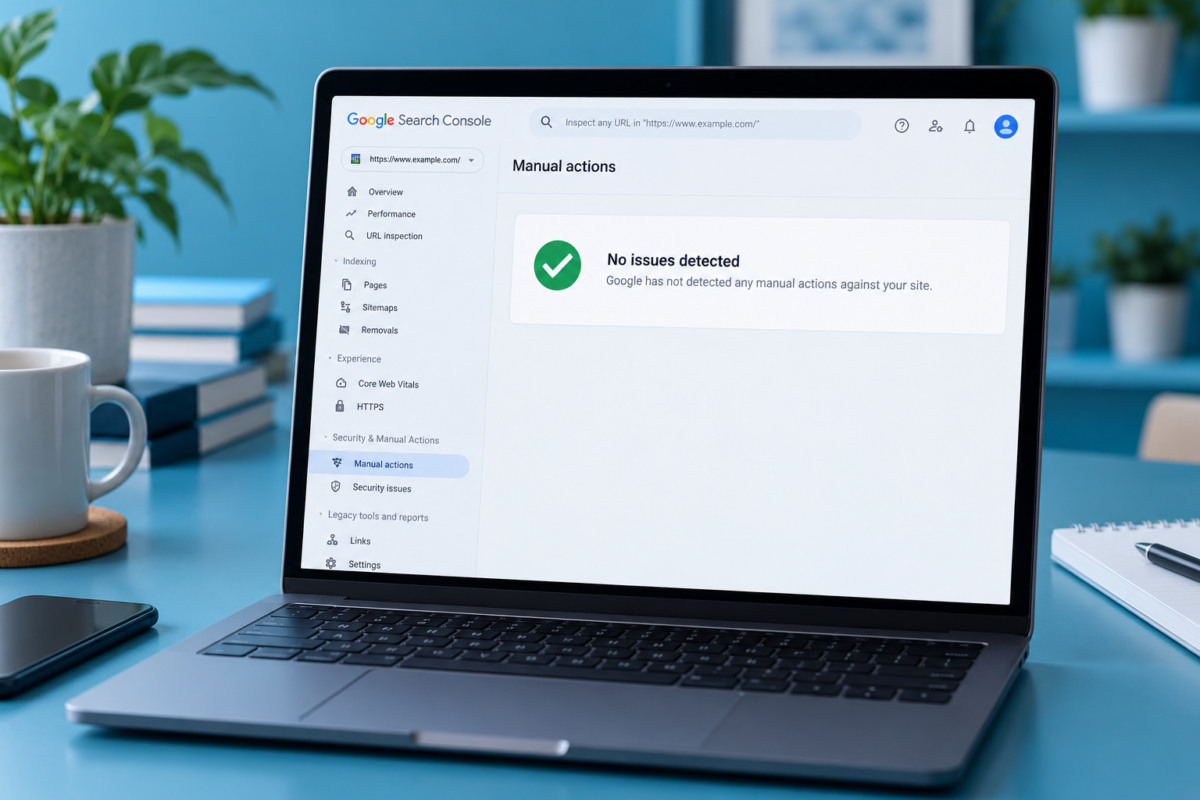
- Open Search Console and look at the Manual actions report. A manual action is listed there with a reason. Automatic demotions from spam updates do not appear in that report.
- Find which pages or sections lost traffic. Spam demotions often hit a whole section, such as a folder of city pages or a batch of similar posts.
- Compare those pages honestly against the policies above.
What to Fix
If you find pages that break the policies, remove the problem rather than disguise it:
- Delete or merge thin, repetitive pages instead of lightly rewording them
- Rebuild city pages with real local detail, or fold them into one strong service page
- Remove blocks of keyword lists, such as long lists of cities in the footer
- Take down copied content and replace it with original work
- Stop any tactic designed to force AI mentions rather than earn them
If you are rebuilding location pages, the test is simple: each one should give a reader in that city something the other city pages do not. A spam risk check across content, location pages, and links is a normal part of SEO services in Pakistan after a drop like this.
Manual Action or Automatic Demotion?
A manual action is a decision by a human reviewer. It appears in Search Console, and once you fix the issue you can request a review. An automatic demotion from a spam update has no review button. After you fix the problems, Google's systems need time to recrawl and reassess the site, which can take months.
Is This About AI Content?
No. The August 2026 spam update was widely described online as an AI crackdown, but Google's policies judge the purpose and quality of content, not the tool used to make it. A carefully checked article written with AI help that genuinely answers people's questions is not spam. Hundreds of unedited pages created to catch search traffic are spam whoever or whatever typed them.
Links Are Still Not Safe to Buy
The June and August updates were not about link spam, but that does not make bought links safe. Google handles link spam through separate systems, and paid or exchanged links can still be ignored or lead to a manual action.
Protecting Your Site From Here
Publish fewer, better pages. Make every location page genuinely useful. Review old content regularly and remove what no longer helps anyone. Keep a record of what you publish and when, so if a future update hits one section, you know where to look first. If an SEO service provider in Pakistan offers you fifty posts a month, ask who is going to fact-check them.
Before any digital marketing agency in Pakistan recommends more content for your site, ask which of these risks already apply to it.
Frequently Asked Questions
1. How many spam updates did Google release in 2026?
Three so far: in March, June, and August. The August update ran from August 18 to 21.
2. What did the August 2026 spam update target?
Google said it applied to its spam policies globally and was not aimed at link spam or site reputation abuse, which points toward content problems.
3. How do I know if I have a manual action?
Check the Manual actions report in Google Search Console. Automatic demotions from spam updates do not appear there.
4. Is AI-generated content treated as spam?
Not automatically. Google judges quality and purpose. Mass-produced pages made mainly to rank are the problem, however they were created.
5. How long does recovery from a spam update take?
After fixes, it can take months for Google to recrawl and reassess the site, since there is no review request for automatic demotions.