
AI Max in Google Ads is a set of features inside Search campaigns that lets Google's AI decide more of what your ad does. It can show your ad for searches you never added as keywords, rewrite parts of your ad text, and send the click to a different page on your website. Should you turn it on? For some accounts it helps. For others it spends money faster than it earns it.
The answer depends on how much data your account has, how well your conversions are tracked, and how much control you need over what your ads say. This guide explains each part in plain words so you can decide.
What AI Max Actually Does
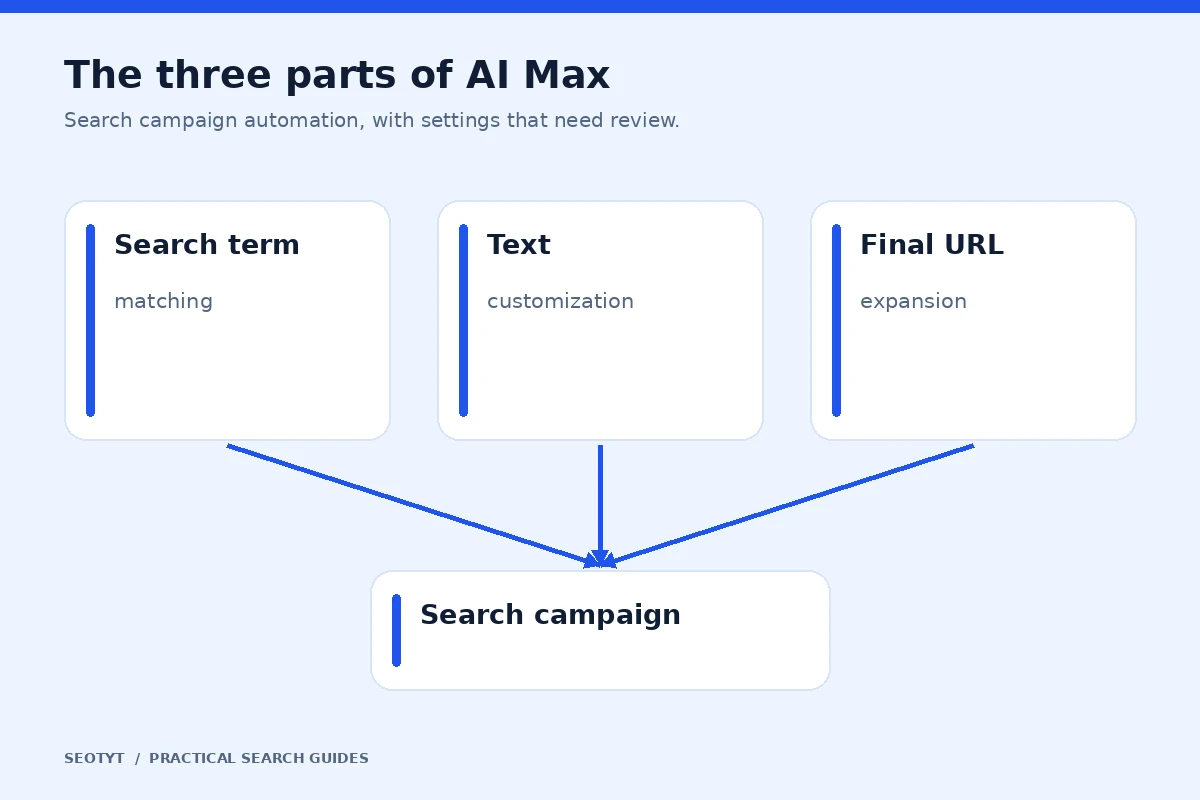
AI Max is not a new campaign type. It is a setting on a normal Search campaign, made up of three features.
- Search term matching: Google shows your ad for searches related to your keywords, your ads, and your landing pages, including searches that match none of your keywords directly
- Text customization: Google writes or adjusts headlines and descriptions using content from your website and existing ads
- Final URL expansion: Google can send the visitor to a page on your site that it judges more relevant than the one you chose
Together they aim to catch more searches and match each one with a fitting ad and page. The idea is sound. The risk is that "related" searches are not always searches from people who want to buy.
The Controls You Keep
You do not have to accept all three. Google lets advertisers switch off text customization and final URL expansion for a campaign, and switch off search term matching for individual ad groups. Final URL expansion depends on text customization, so turning off text customization turns both off.
Other controls still apply.
- Negative keywords continue to block searches you do not want
- URL exclusions stop Google from sending traffic to pages such as blogs, careers, or policies
- Brand settings let you limit which brand searches your ads appear for
- Location settings can be tightened at ad group level
One detail matters for regulated businesses. When final URL expansion is on, pinned headlines may not be respected. If your ad wording must be approved, as in medical, legal, or financial services, keep that feature off.
When Turning It On Makes Sense
AI Max learns from results. It needs enough of them to learn anything useful.
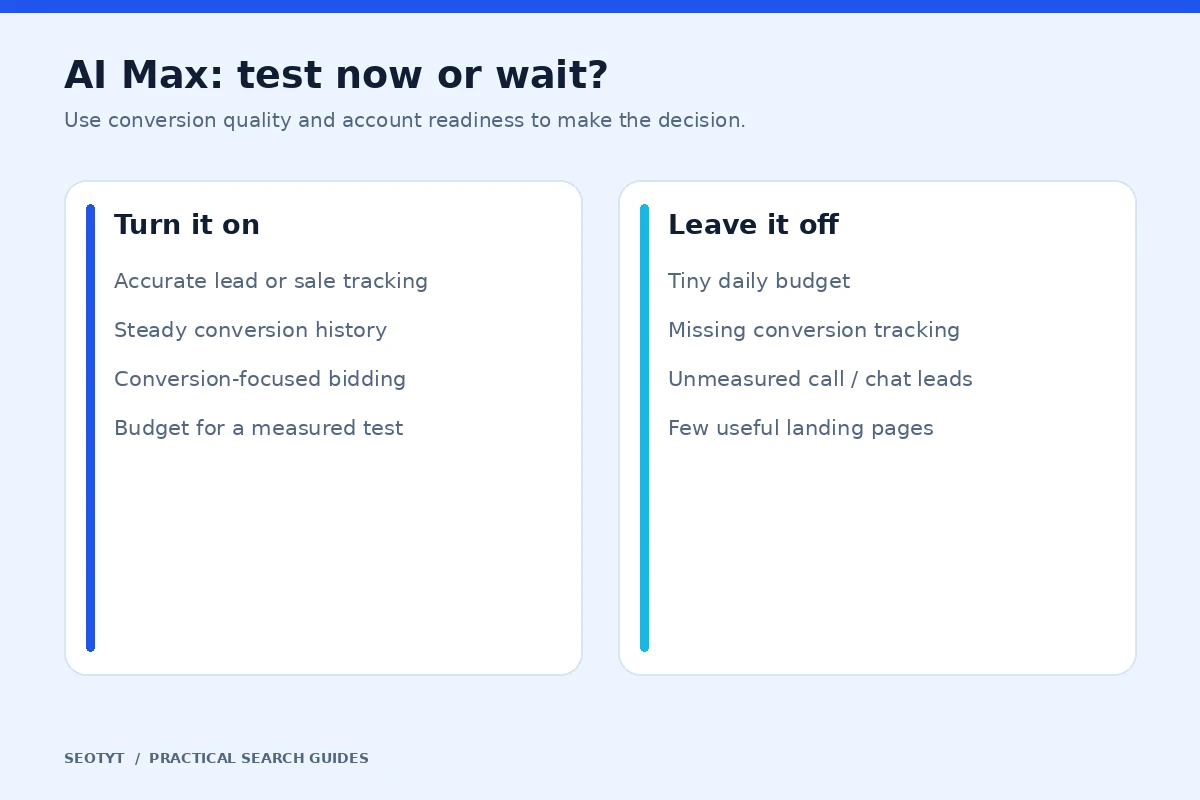
- Your conversion tracking is accurate and records real leads or sales
- The campaign already gets a steady flow of conversions each month
- You use automated bidding aimed at conversions or conversion value
- Your website has clear, separate pages for each product or service
- You have room in the budget to test for several weeks
Accounts like this often find new, profitable searches they would never have thought to add as keywords.
When to Leave It Off
For many small advertisers in Pakistan the safer choice is to wait.
- Your daily budget is small and every click needs to count
- Conversions are not tracked, or only page views are being counted
- Calls and WhatsApp messages are your main leads and are not measured
- Your site has only a few pages, so there is little for Google to match against
- You serve a narrow area or a specialist service where broad matching brings poor leads
Without good tracking, AI Max cannot tell a serious buyer from a curious visitor. It will bring more clicks, and you will have no way to know whether they were worth paying for. Fixing tracking first is basic Google Ads management and should come before any automation.
How to Test It Safely
If your account meets the conditions above, do not switch everything on at once. A careful test looks like this.
- Start with one campaign, not the whole account
- Turn on search term matching only, and leave the other two features off at first
- Add URL exclusions for pages that should never be landing pages
- Check the search terms report every few days and add negative keywords
- Compare cost per lead before and after over at least three to four weeks
Google's reports now show which searches came through AI Max matching, so you can see what the feature added. Judge it on the cost of a real lead, not on clicks or impressions.
Your Landing Pages Matter More Now
Because AI Max reads your website to decide which searches to match and what to write, weak pages lead to weak ads. A site with one long "services" page gives Google very little to work with. Separate, well-written pages for each service help both your ads and your organic rankings. City pages work the same way. A business that has invested in SEO in Islamabad, with a proper page for that city, gives Google a clear match for ad searches that name it. A web development company in Pakistan can usually restructure these pages without rebuilding the whole site.
This is also where ads and SEO meet. The same clear pages that help AI Max help a business investing in SEO services in Pakistan, because both depend on Google understanding exactly what each page offers.
The Short Answer
Turn AI Max on if your tracking is reliable, your campaign already converts, and you can watch the results closely. Leave it off if your budget is tight or your leads are not measured. Any SEO service provider in Pakistan that also runs ads should be able to show you the search terms report and explain what the feature is doing with your money.
Automation is useful when someone is checking its work. If you would like a second opinion on your account settings, a digital marketing agency in Pakistan can review them and tell you whether AI Max is helping or only spending.
Frequently Asked Questions
What is AI Max in Google Ads?
It is a set of features for Search campaigns that widens the searches your ads match, adjusts ad text, and can choose a different landing page on your site.
Is AI Max the same as Performance Max?
No. AI Max is a setting inside a Search campaign. Performance Max is a separate campaign type that runs across Search, YouTube, Display, Gmail, and Maps.
Can I use only part of AI Max?
Yes. You can turn off text customization and final URL expansion for a campaign, and turn off search term matching for specific ad groups.
Do negative keywords still work with AI Max?
Yes. Negative keywords continue to block unwanted searches, which makes reviewing the search terms report regularly even more important.
Should a small business turn on AI Max?
Only if conversions are tracked accurately and the campaign already brings steady leads. With a small budget and no tracking, it is safer to leave it off.