
Starting August 24, 2026, YouTube counts a view the moment a video begins to play, with no minimum watch time required, across long-form videos, live streams, and Shorts. Shorts have technically worked this way since March 2025, so most of the shock is landing on regular uploads and live content, but the effect on how you should read your numbers applies everywhere. If you want to measure YouTube Shorts performance properly after this update, the raw view count sitting on top of the video is no longer a number worth building a strategy around.
The count will look bigger, sometimes a lot bigger. That does not mean your Shorts are reaching more people or performing better than they were last month. Here is what actually changed, which numbers deserve your attention instead, and how to set up reporting that does not fall apart the moment the definition of a view shifts under your feet.
What Actually Changed in the View Count
Before this update, a view on a regular video needed a viewer to watch for a stretch of time before it counted, an unofficial threshold widely believed to sit around 30 seconds, though YouTube never confirmed the exact figure. From August 24, 2026, that threshold is gone for every format. A Short, a long video, or a livestream now earns a view the instant playback starts, even if the person swipes away a second later.
YouTube has said this does not touch monetization or channel monetization eligibility. Both continue to run on a stricter metric called engaged views, visible in YouTube Analytics under Advanced Mode. So the number under your video jumps, while the number that actually decides ad revenue and channel standing stays on the old, more demanding definition.
Why Public View Count Stops Being Useful on Its Own
A view count that includes every single play, no matter how short, tells you how many times a thumbnail or a first second of video managed to catch a scroll. That is a real thing worth knowing, but it is exposure, not performance. Two Shorts can post the exact same view count under the new system and mean completely different things: one held people for eighteen seconds and drove comments, the other lost ninety percent of viewers in the first two seconds.
For anyone running content as part of a real marketing plan rather than chasing a number for its own sake, this is the moment to stop treating views as the scoreboard.
Five Metrics to Watch Instead of the Public View Count
- Engaged views in Advanced Mode, since this still reflects genuine watch behaviour rather than a first-frame play
- Average view duration and the audience retention curve, which shows exactly where people drop off inside each Short
- Click-through on end screens, pinned comments, and bio links, since attention only matters if it moves someone somewhere
- Subscriber conversion per Short, a far better read on whether content is building an actual audience
- Business outcomes tied to specific content: inquiries, form fills, calls, or sales that trace back to a given upload
A Quick Example of Why This Distinction Matters
Picture two Shorts posted by the same channel in September 2026, both showing 50,000 views. The first held an average of fourteen seconds of watch time, picked up a steady stream of comments, and sent thirty people to the channel’s bio link. The second lost most viewers within two seconds and generated almost no engagement beyond the initial play. Under the old system, that second Short may not have crossed 50,000 views at all, since a large share of those first-second swipe-aways would never have counted. Under the new system, both Shorts look identical on the surface, and only engaged views and retention data reveal which one actually did the job.
This is exactly the kind of gap a public view count can no longer be trusted to expose on its own, which is why building the habit of checking Advanced Mode matters more now than it did a year ago.
Common Mistakes to Avoid With the New Numbers
- Reporting a rise in views as a rise in reach without checking engaged views first
- Comparing pre and post August 24 numbers on the same chart without flagging the definition change
- Judging a creator or campaign’s success by view count alone when negotiating a partnership
- Assuming a drop in engaged views means a drop in overall performance, when it may simply reflect a public view count that finally stopped hiding the real retention picture
Setting Up Reporting So the Jump Doesn’t Confuse Your Team
If you report on YouTube performance monthly, mark August 24, 2026 clearly as a break point in your data. Comparing July’s view count to September’s under the new counting rules is not a fair before-and-after, because the definition of a view itself changed midstream. Older videos keep their existing totals since YouTube is not recalculating history, so even your channel-wide lifetime view number will start behaving oddly for a while.
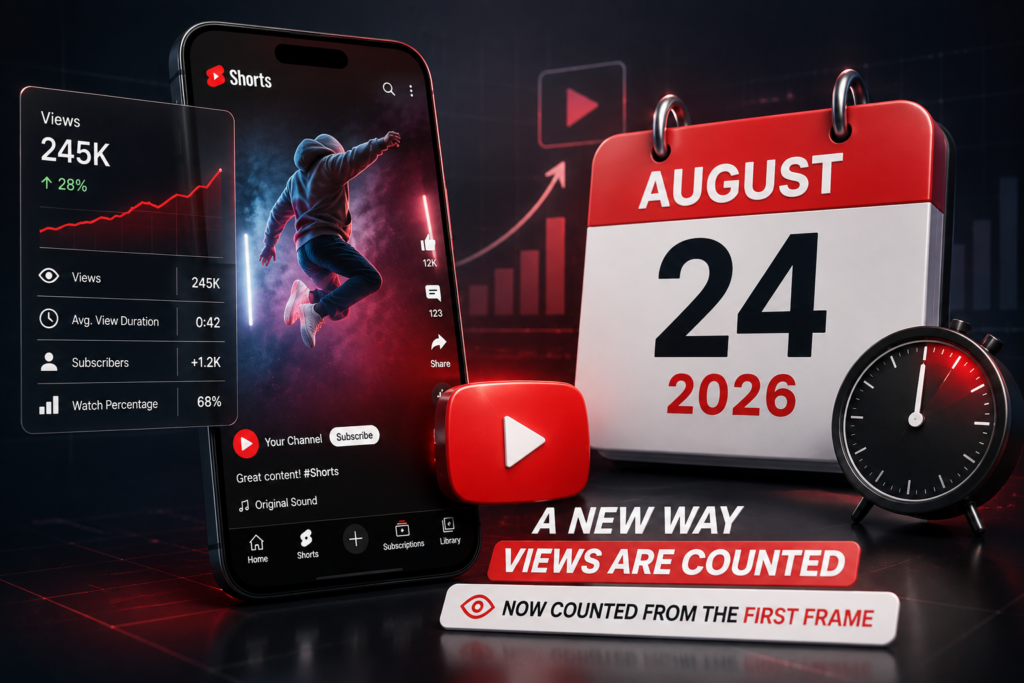
The cleanest fix is to set a fresh baseline the week of August 24 and track engaged views, retention, and conversions from that point forward, rather than trying to stitch old and new numbers into one continuous line on a chart. Label the change plainly in any deck or dashboard so nobody on the team mistakes a counting update for sudden, unexplained growth.
Where This Fits Into a Wider Content Strategy
Whether Shorts sit inside an in-house content calendar or are handled by a partner offering social media marketing services in Pakistan, the principle stays the same. Exposure and engagement are not interchangeable, and a good report should never let one disguise as the other.
This is also a reminder that platform metrics shift far more often than most businesses expect, which is a large part of why ongoing management matters more than a one-time setup. As a digital marketing agency in Pakistan, SEOTYT builds updates like this one into client reporting as soon as they are announced, alongside our wider SEO services in Pakistan and content work, so a spike in views is never mistaken for a spike in real reach.
None of this means view count is useless. A first-frame view still tells you a thumbnail, a hook, or a title did its job, and that is genuinely worth optimizing for. The mistake is stopping there. Pair that exposure number with engaged views, retention, and a clear line to business outcomes, and you get a full picture instead of a headline figure that only tells half the story.
Frequently Asked Questions
1. Why did YouTube change its Shorts view counting system?
YouTube said it wanted one consistent definition of a view across long-form video, Shorts, live streams, and podcasts, after running several different, inconsistent counting systems for years. Standardizing the rule makes it easier for creators to compare performance across formats and to show brand partners their true reach.
2. What do creators need to know about the YouTube view count change on August 24, 2026?
A view now counts from the first frame of playback with no minimum watch time, across every format. Earnings and Partner Program eligibility are unaffected since both continue to run on engaged views. Videos published before August 24, 2026 keep their existing view counts and are not recalculated.
3. What does it mean that YouTube views now count from the first frame?
It means a view is logged the instant the very first frame of a video renders on a viewer’s screen, even if they leave a second later. This makes public view count a measure of exposure rather than a measure of how long someone actually watched.
4. What changes for YouTube views after August 24, 2026?
Public view counts across long-form video, Shorts, and live streams rise because the counting threshold that used to filter out very short plays has been removed. The change is a measurement update, not a sign that content is suddenly reaching more people.
5. After the new view count update, what should brands track in their YouTube marketing?
Brands should shift primary reporting to engaged views, average view duration, and outcomes like clicks and conversions, rather than the public view count, since that number can now rise without any real change in audience reach.
6. Does the new view counting system affect Shorts monetization or the Partner Program?
No. YouTube has confirmed that monetization and Partner Program eligibility continue to be based on engaged views and engaged watch hours, both of which use the older, stricter definition of a view.
7. Where can I find engaged views in YouTube Analytics?
Open YouTube Studio, go to Analytics, and switch to Advanced Mode. Engaged views and engaged watch hours are listed there separately from the standard public view count shown on the main dashboard.
8. Should I stop comparing this month’s Shorts views to last month’s?
For any comparison that spans August 24, 2026, yes. Set a fresh baseline from that date and compare engaged views and retention going forward, rather than mixing pre and post-update numbers on the same chart.